Your trees work hard for you. They shade your home, raise your property value, and anchor your landscape for decades. But they face more threats than ever, from invasive insects like emerald ash borer to diseases like oak wilt.
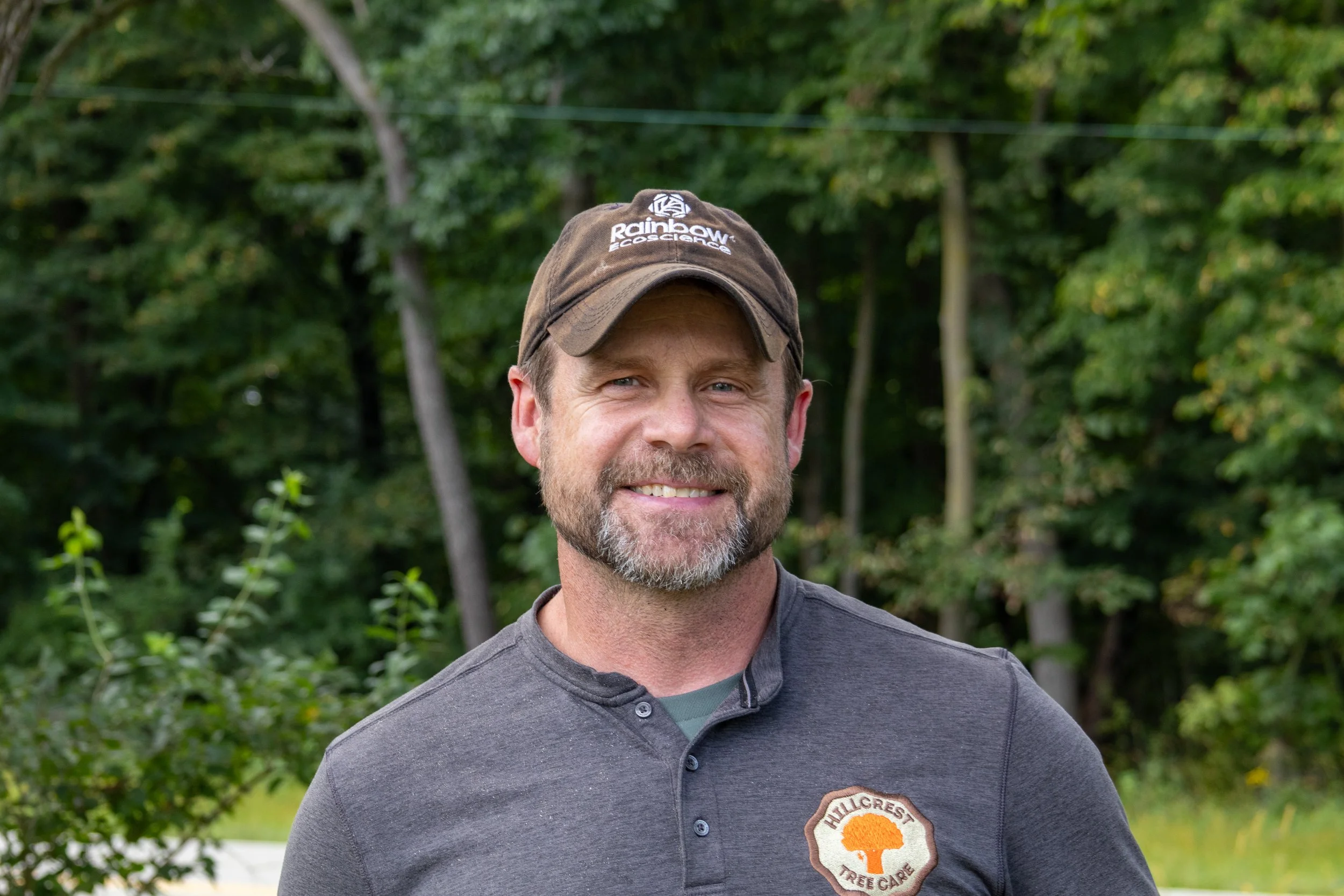
Matt Duffy
That's why we're excited to announce that we are now offering Plant Health Care services at Hillcrest Tree Care, led by Matt Duffy. This new division focuses on keeping your trees healthy, not just cleaning up after problems. Matt is an ISA Certified Arborist (WI-0777A), Tree Risk Assessment Qualified (TRAQ), and a Wisconsin commercial pesticide applicator (#515300).
What Is Plant Health Care?
Plant Health Care is a proactive approach to tree and shrub care. Instead of waiting until a tree is dying, we look for early warning signs, find out what's actually causing them, and treat the cause.
It's a lot like preventive care for people. Catching a problem early is almost always easier, cheaper, and more successful than trying to save a tree in decline. In many cases, especially with emerald ash borer, oak wilt, and Dutch elm disease, protecting a healthy tree is far more effective than trying to rescue an infected one. It's also much less expensive than removing and replacing a mature tree.
Our Approach: Industry Best Practices
Our Plant Health Care program follows the International Society of Arboriculture's (ISA) Best Management Practices, the industry's standards for caring for trees and shrubs. At the core is Integrated Pest Management (IPM): using the right treatment, at the right time, only when it's needed.
In practice, that means:
Monitoring before treating: We watch pest and disease levels over time and treat only when they reach the point where they threaten your tree's health.
Proper timing and application: Every treatment is applied at the stage of a pest's life cycle when it works best, using the most targeted method available.
Prevention over reaction: We focus on keeping trees healthy and resilient, rather than waiting until they're in decline.
Cultural care: Often the best fix isn't a product at all. Proper mulching, watering, pruning, and soil care help trees defend themselves.
The right plant in the right place: We can help you choose trees and shrubs suited to your site and soil, so they're less prone to problems in the first place.
The result is a program that's effective, responsible, and tailored to your property, without unnecessary treatments.
Diagnosis First: Lab-Tested, Not Guesswork
Many tree problems look alike. Yellowing leaves could mean a nutrient problem, root damage, or disease. Branch dieback could be an insect, a fungus, or drought stress. Treating the wrong problem wastes your money and leaves the real issue untouched.
That's why we collect samples and send them to University of Wisconsin labs when a diagnosis isn't clear. The results let us prescribe treatments that are appropriate and effective, and skip the ones that aren't needed.
Soil analysis: Measures pH, soil texture, and macro- and micronutrient levels.
Tested by the UW Soil and Forage Analysis Lab.
Tissue (leaf) analysis: Combined with a soil test, shows whether the tree itself is short on a nutrient.
Tested by the UW Soil and Forage Analysis Lab.
Insect and disease analysis: Positively identifies the pest or pathogen affecting your tree.
Tested by the plant pathologist and entomologist at the UW-Madison Plant Disease Diagnostic Clinic (PDDC).
Insect Pests We Treat
Wood-boring insects
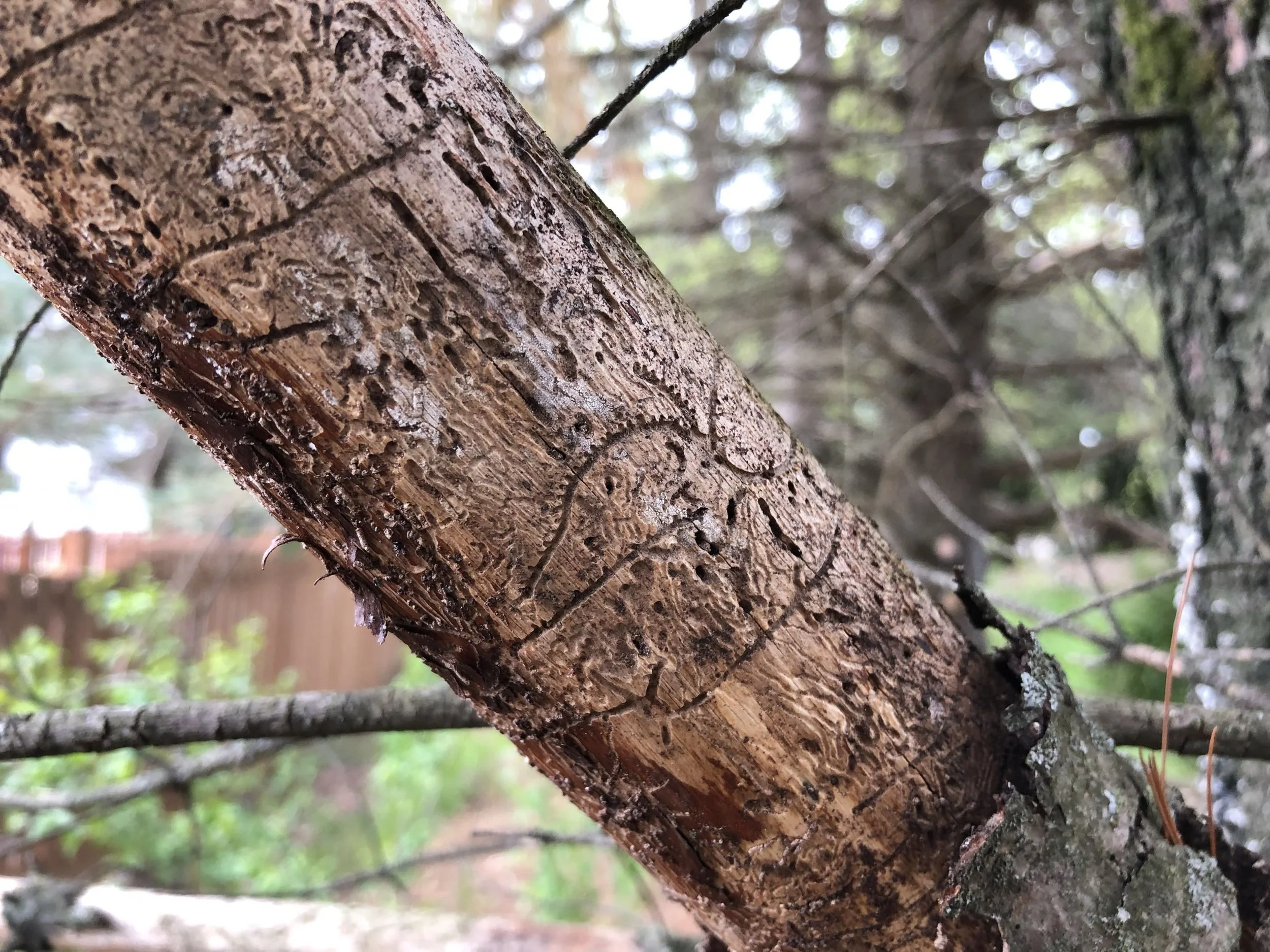
Damage from a pine bark beetle.
Borers tunnel under the bark and cut off the flow of water and nutrients. By the time you notice dieback, the damage is often well underway.
Emerald ash borer: An invasive beetle that kills nearly every untreated ash tree it reaches. Treatment protects healthy ash trees and works best when started before the tree shows significant decline.
Two-lined chestnut borer: Attacks oaks, especially ones stressed by drought, construction, or defoliating insects. Look for thinning and dieback starting at the top of the canopy.
Bronze birch borer: The leading killer of white-barked birches, particularly paper birch. Dieback typically starts at the top of the tree and works down.
Pine bark beetle: Targets stressed or weakened pines.
Zimmerman pine moth: Its larvae bore into pine trunks where branches attach, leaving sticky pitch masses and weakening branches until they break.
Scale, adelgids, and mites
These small, easy-to-miss pests feed on sap, slowly weakening trees and shrubs.
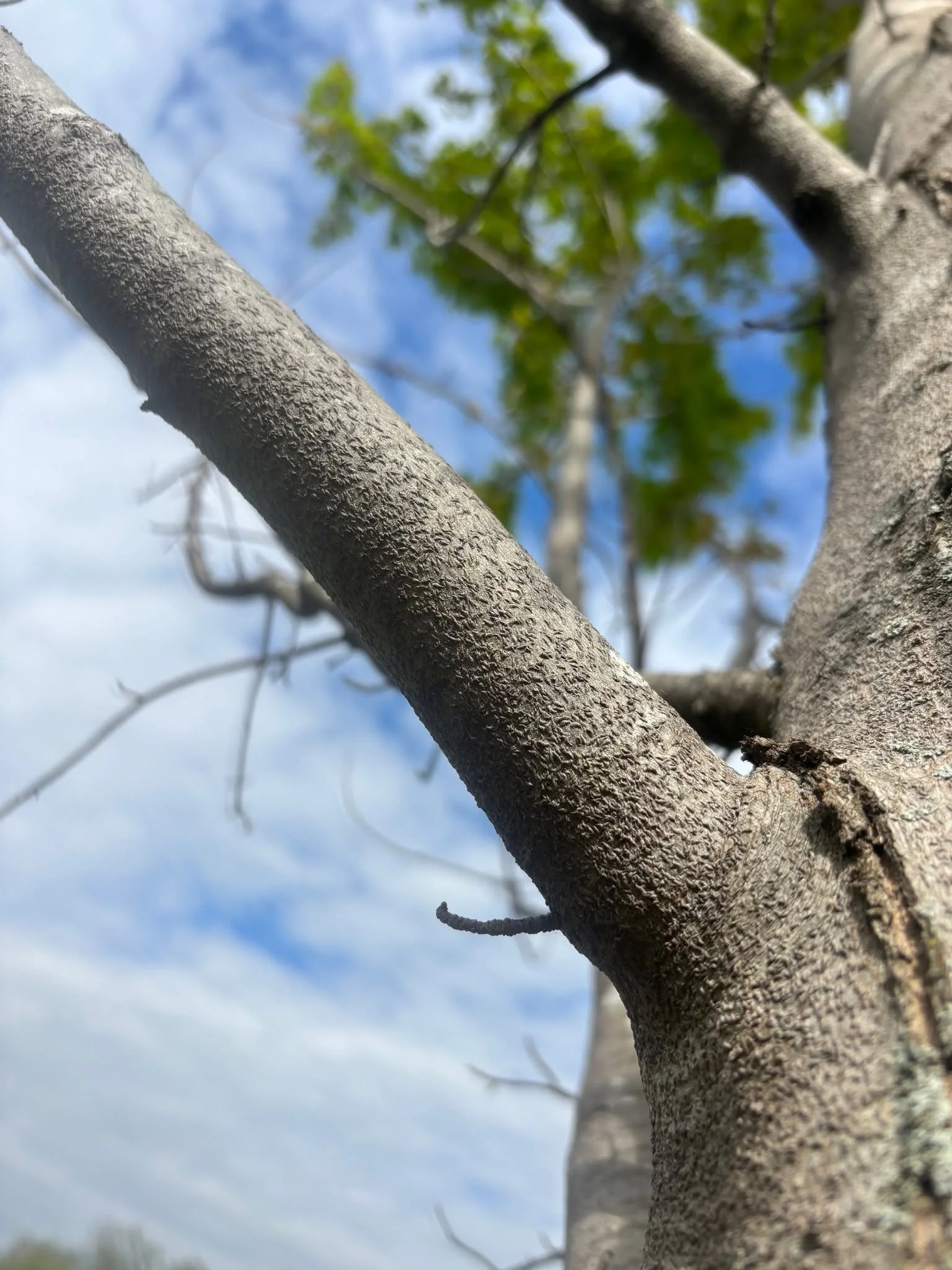
Armored scale
Magnolia scale: Large, bumpy insects on magnolia twigs. They produce sticky honeydew that leads to black sooty mold.
Armored scale: Tiny, shell-covered insects that feed on many trees and shrubs, often causing yellowing and branch dieback.
Pine bark adelgid: White, woolly patches on the bark of pines, especially white pine.
Spruce spider mites: Cool-weather mites that cause speckled, yellow-to-brown needles on spruce, most active in spring and fall.
Leaf-feeding insects
Spongy moth (formerly gypsy moth): Caterpillars that can strip oaks and many other trees of their leaves.
Japanese beetle: Skeletonizes leaves on lindens, birches, and many ornamentals.
Viburnum leaf beetle: Eats viburnum leaves down to the veins. Repeated years of damage can kill the shrub.
Elm zigzag sawfly: A newer invasive pest in North America whose larvae chew distinctive zigzag patterns into elm leaves.
Gall-forming insects
Galls are abnormal growths that trees form in response to insects. Light infestations are mostly cosmetic, but heavy ones can cause branch dieback.
Eastern spruce gall adelgid: Pineapple-shaped galls at the tips of spruce branches.
Oak bullet gall: Hard, round galls clustered on oak twigs.
Hickory petiole gall: Galls on the leaf stems of hickories.
Diseases We Treat
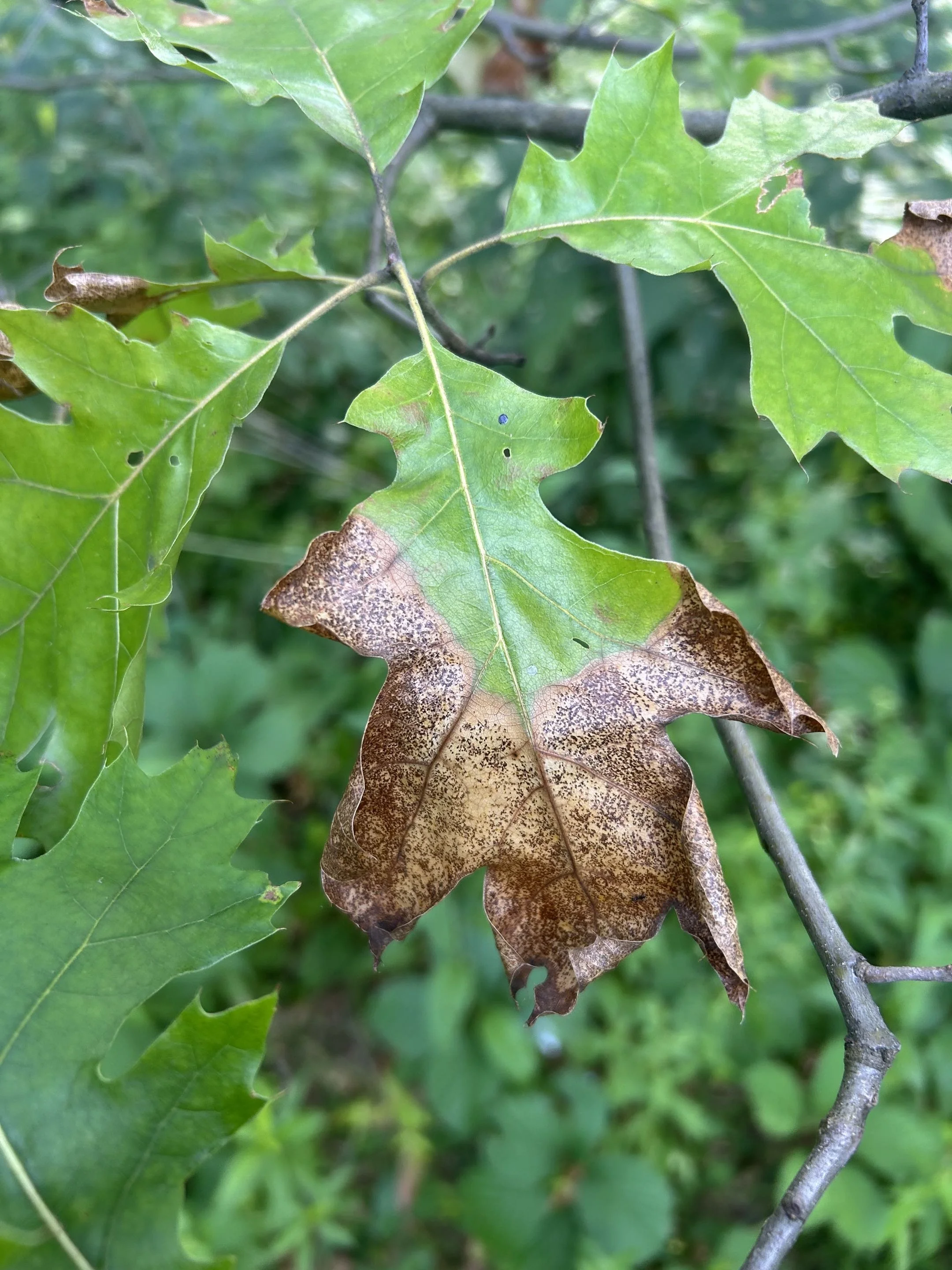
Oak wilt damage on a red oak leaf.
Oak wilt: A fungal disease that can kill red oaks in a single season and white or bur oaks more slowly. It spreads through connected roots and by beetles drawn to fresh wounds. Preventive treatment can protect valuable oaks, especially those near infected trees.
Bur oak blight: A fungal leaf disease that browns bur oak leaves in late summer. It tends to get worse year after year and weakens the tree over time.
Dutch elm disease: The disease that wiped out most of America's elms. Preventive treatment helps protect healthy elms that remain.
Apple scab: Causes dark spots on the leaves of crabapples and apples, followed by early leaf drop. Timed spring treatments keep trees looking their best.
Beyond Pests and Disease
Not every tree problem is caused by a living organism. Some come from the tree's environment.
Chlorosis: Yellow leaves with green veins, common on pin oaks and maples. It usually happens when high-pH soil keeps a tree from absorbing iron or manganese, even when those nutrients are in the soil. Soil and tissue analysis tells us whether chlorosis is the cause, and treatment gets the missing nutrients to the tree.
Growth regulator (Cambistat): Slows canopy growth so the tree puts more energy into its fine root mass and natural defenses. It's useful for stressed trees, trees impacted by construction and for trees that need to stay smaller, such as those near buildings or power lines.
How We Apply Treatments
We use the most targeted method for each problem, which means less product in the environment and better results for your tree.
Trunk injection: Treatment goes directly into the tree's vascular system. There's no spray drift, and it works well for problems like emerald ash borer, oak wilt, and Dutch elm disease.
Soil injection and soil drench: Treatment is placed in the root zone, where the tree draws it up over time. This is our most common method for sap-feeding and wood-boring insects.
Foliar and trunk sprays: Used when a pest or disease is best reached on the leaves, needles, or bark, such as spider mites, apple scab, and Zimmerman pine moth.
All treatments are applied by Matt, our licensed applicator, according to product labels and Wisconsin regulations.
Schedule a Tree Health Assessment
If a tree on your property is thinning, yellowing, losing branches, or just doesn't look right, now is the time to find out why. Fall is a great time for an assessment and soil testing, so a treatment plan is ready to go when spring arrives.
During an assessment, our ISA Certified Arborists will inspect your trees and shrubs, collect samples if needed, and recommend a plan that fits your property and budget.