
Blog
Help, I Have Mushrooms! What Fungi Can Tell You About Your Trees
After a hot summer, cooler temperatures and heavy autumn rains can make mushrooms pop up seemingly out of nowhere. When they show up on or near a tree, the natural question is: "Does this mean my tree is dying?"
The answer is: it depends on where the mushrooms are growing.
After a hot summer, cooler temperatures and heavy autumn rains can make mushrooms pop up seemingly out of nowhere. When they show up on or near a tree, the natural question is: "Does this mean my tree is dying?"
The answer is: it depends on where the mushrooms are growing.
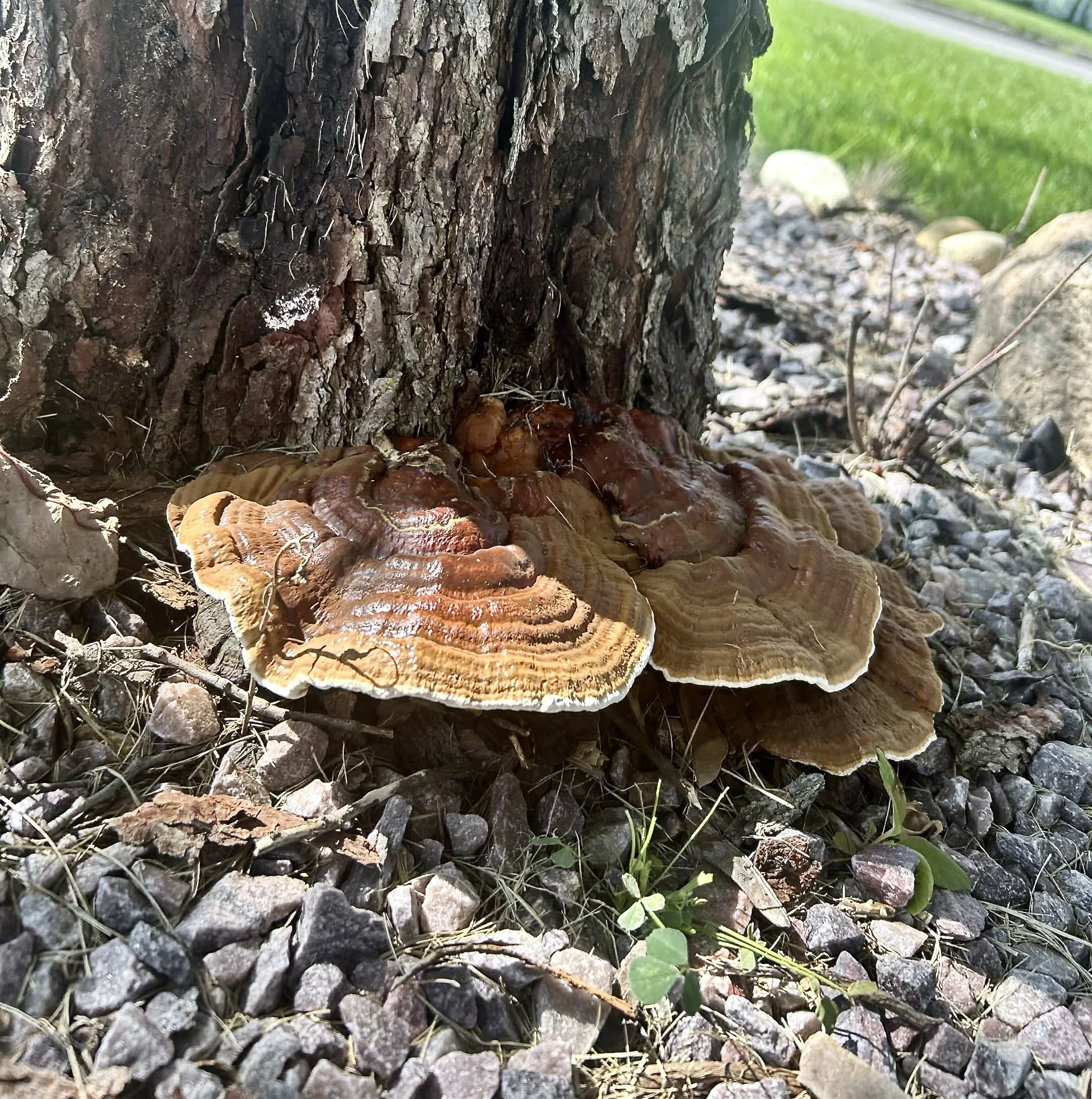
Ganoderma Sessile on a Red Bud. This is a root rot fungus.
Mushrooms on the Ground: Usually Nothing to Worry About
Mushrooms scattered across your lawn or mulch are usually harmless. Most are feeding on decaying material in the soil, like old roots, buried wood, or mulch. Some are even helpful, forming partnerships with tree roots that help the tree absorb water and nutrients.
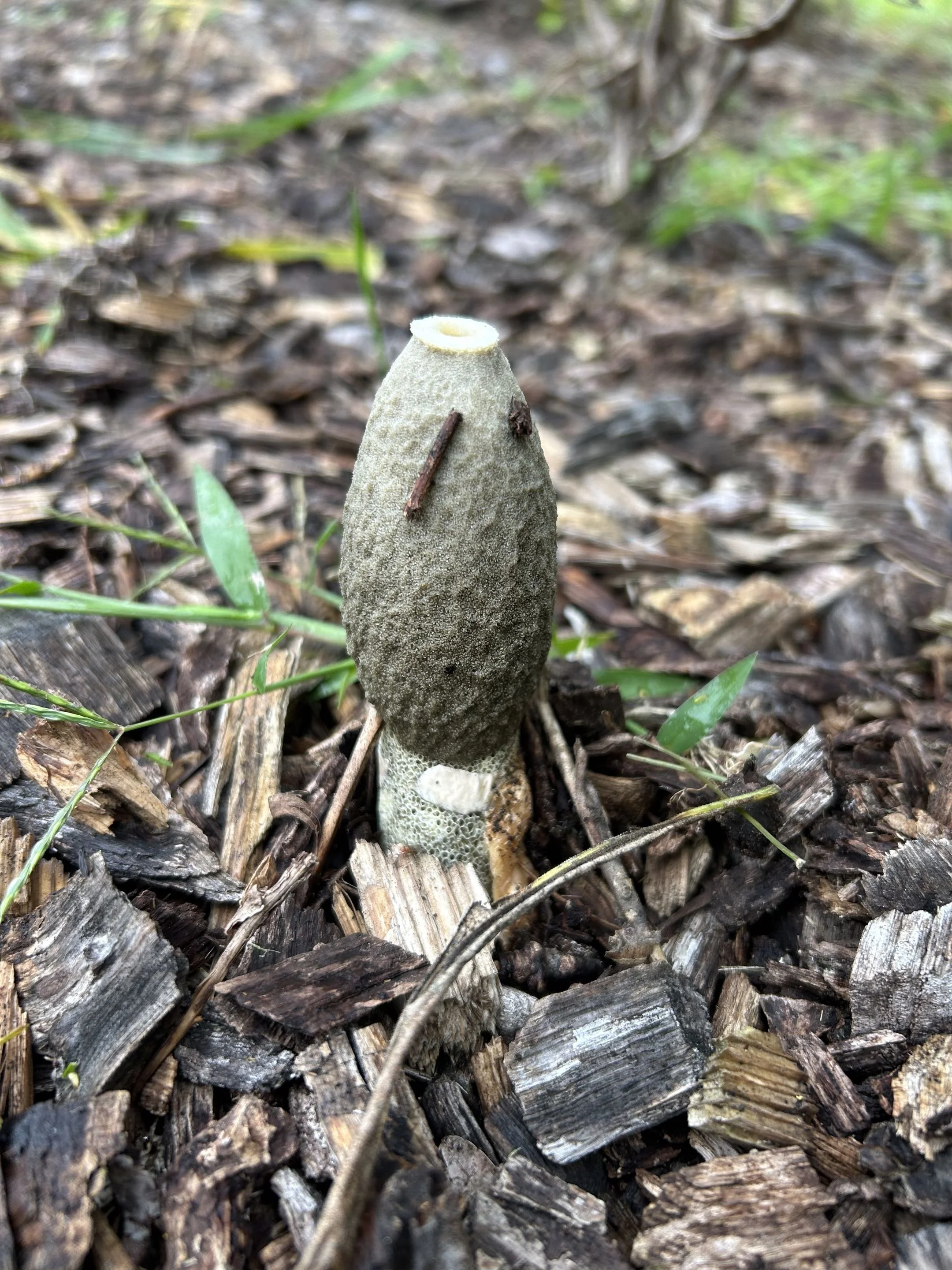
Stinkhorn plays an important role in decomposing plant material into soil nutrients.
The exception: mushrooms growing in clusters right at the base of a tree, or following the line of its roots, can be a sign of root rot. Those are worth a closer look.
Mushrooms on the Trunk or Root Flare: Time for a Closer Look
Mushrooms or shelf-like growths (called conks) on the trunk, or on the root flare where the trunk widens at the ground, often mean some level of decay inside the tree. That decay can affect both the tree's health and its structural safety.
It isn't always bad news, though. Not every fungus attacks living tissue, and some only break down wood that's already dead. Many trees produce the same mushrooms season after season and stay strong for years. The only way to know is to identify the fungus and check how much sound wood remains.
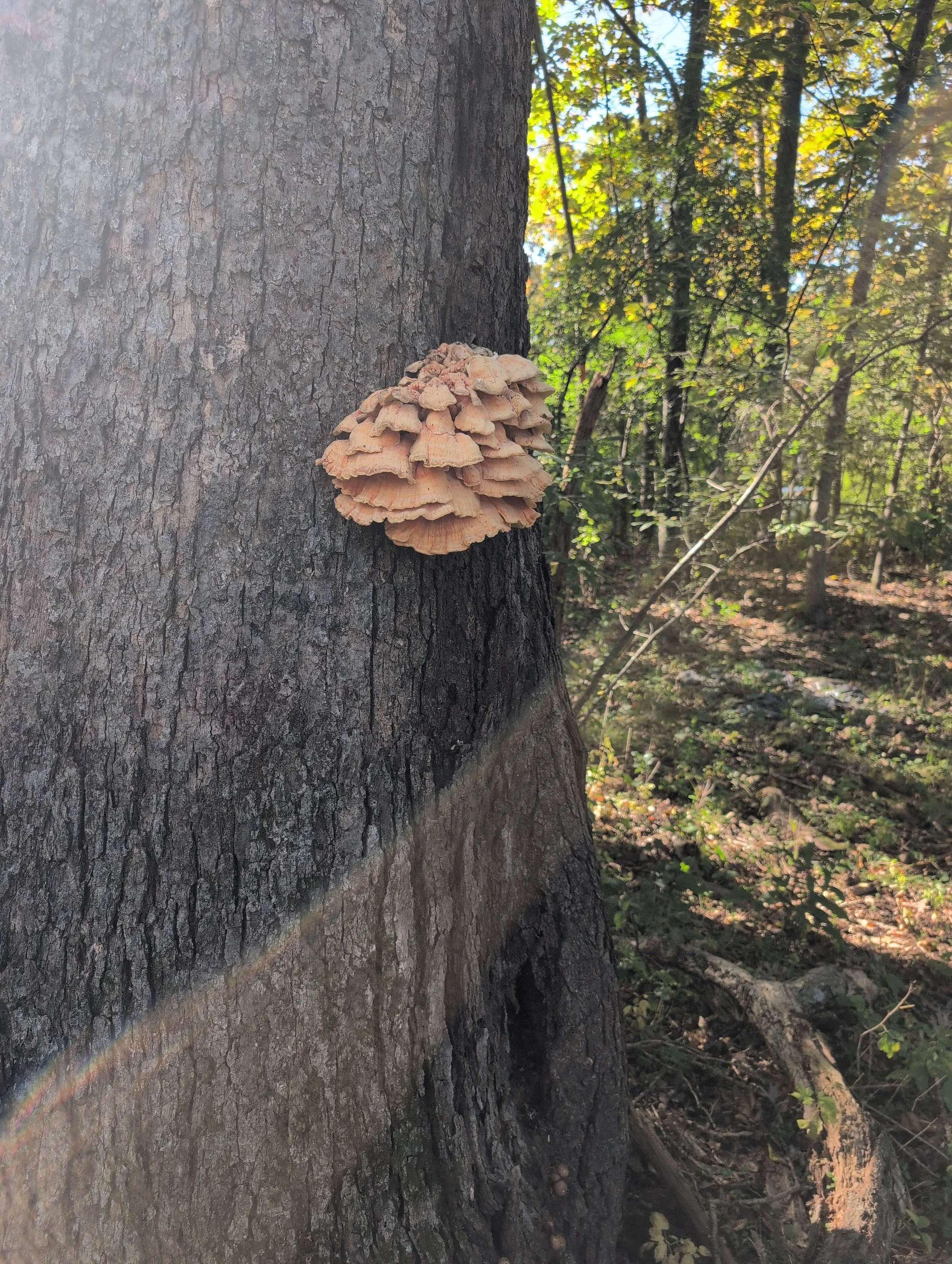
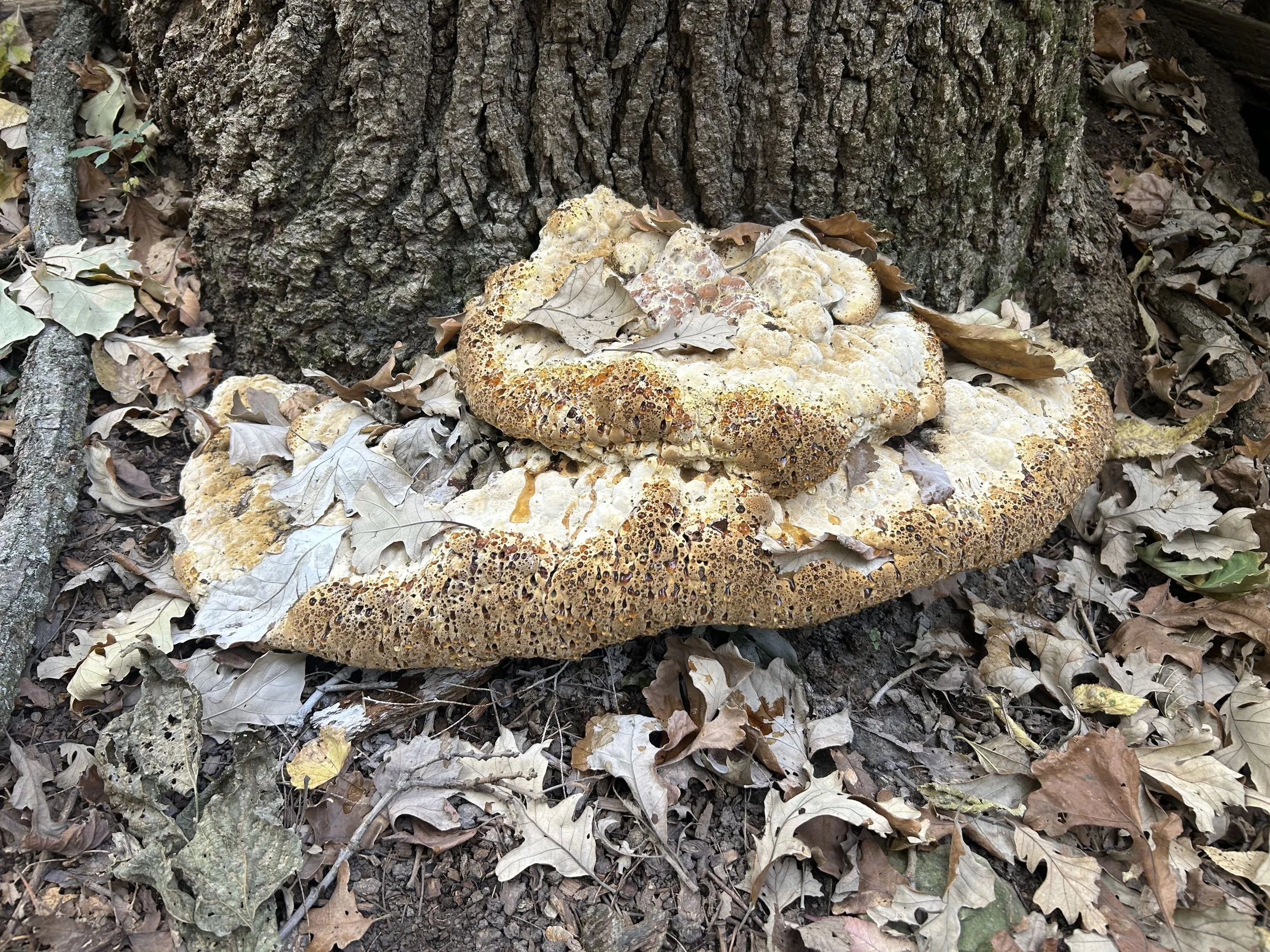
Chicken of the Woods on an oak tree.
Other Signs to Watch For
Mushrooms are more concerning when they show up along with other warning signs:
Cracks, cavities, or soft, crumbly wood in the trunk
Dead or dying branches, especially at the top of the tree
A new or worsening lean
Thin, small, or yellowing leaves compared to past years
If you notice any of these, especially on a tree near your home, driveway, or play area, don't wait.
Get an Expert Opinion
Because fungi are so complicated, the best next step is an inspection by a certified arborist. Hillcrest Tree Care has four ISA Certified Arborists on staff who are also Tree Risk Assessment Qualified, so we can properly evaluate both your tree's health and whether it's safe.
When necessary, we can identify the fungus, send samples to University of Wisconsin labs when needed, and determine how much damage there is, if any. From there, we'll recommend a treatment plan or, if the tree is unsafe, removal.